TEETH - STRAIGHTENING TREATMENT
SERVICES
RESOURCES
SHOP
MEDICAL CERTIFICATIONS
Certifications ensuring safety, quality, and compliance with global standards.



Certifications ensuring safety, quality, and compliance with global standards.
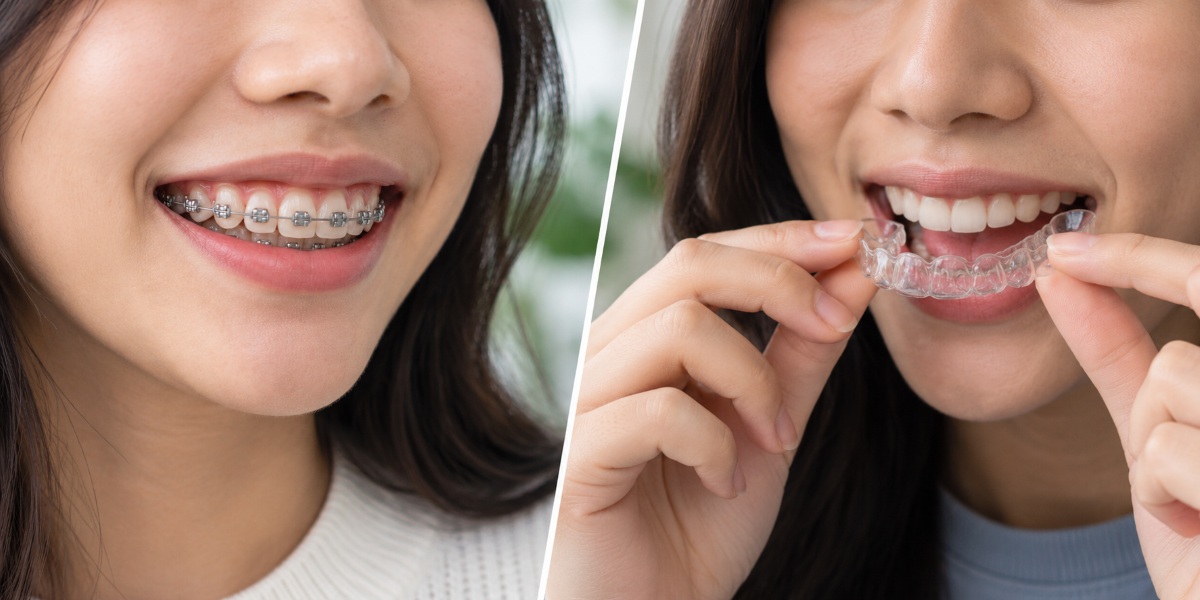
For many years, braces have been one of the most familiar ways to straighten teeth. Today, clear aligners are another option for people who want to improve their teeth alignment while maintaining more flexibility in their daily routine.
Clear aligners are transparent, removable, and designed to gradually move teeth through a planned series of aligners. For some people, these features may make them easier to fit into work, social activities, travel, and everyday life.
This does not mean clear aligners are automatically better than braces. The more suitable option depends on your teeth condition, bite needs, lifestyle, and professional recommendation. This guide explains why some people are considering clear aligners and what to think about before making the switch.
Find out whether clear aligners may suit your teeth condition, bite needs, lifestyle, and smile goals through a Free Smile Assessment.
Both braces and clear aligners are used to gradually move teeth into a better position, but they approach teeth straightening differently.
Braces use fixed brackets and wires, while clear aligners use a series of removable transparent trays. For some people, differences in appearance, removability, and daily routine can play a major role in deciding which option may suit them better.
If you want a direct side-by-side comparison, you can read our guide on clear aligners vs braces for the key differences in appearance, comfort, cleaning, lifestyle, and suitability.
One of the main reasons people consider clear aligners is their discreet appearance.
Because the aligners are transparent, they may be less noticeable than traditional metal braces during everyday activities such as:
This can be especially appealing to adults who want to straighten their teeth without drawing too much attention to the process.
If lifestyle and work are major considerations for you, our guide on clear aligners for working adults explains how aligners may fit into a busy routine.
Unlike braces, clear aligners are removable. They are usually taken out when eating, drinking anything other than water, and cleaning your teeth.
This means you do not normally need to avoid certain foods simply because of brackets or wires. However, it is still important to wear your aligners for the recommended number of hours each day.
For people who often attend dinners, work events, celebrations, or travel, the ability to remove aligners temporarily may provide more flexibility.
You can also read our guide on what you can and cannot eat with clear aligners for practical tips on meals, drinks, and daily aligner care.
Oral hygiene is another reason some people consider clear aligners.
Because clear aligners can be removed, you can usually brush and floss your teeth without needing to clean around brackets and wires.
This may make it easier to maintain your usual oral care routine, especially if you already find cleaning around crowded or overlapping teeth challenging.
However, good hygiene remains important. Teeth should be cleaned before wearing aligners again, particularly after meals or sugary drinks.
For some people, teeth straightening needs to fit around a busy schedule rather than the other way around.
Clear aligners may suit people who value flexibility because they are removable and discreet. This can make daily routines feel more manageable when travelling, attending meetings, going to the gym, eating out, or spending time with friends and family.
However, this flexibility also comes with responsibility. Aligners only work as planned when they are worn consistently as advised.
If you are curious about the mechanics behind aligner movement, you can read our guide on how clear aligners work.
Clear aligners may offer more flexibility than braces, but they are not a completely hands-off option.
You need to wear them consistently, change them according to the recommended schedule, keep them clean, and attend follow-up reviews when advised.
If aligners are frequently left out for too long, teeth may not move as planned and progress may be affected.
This means clear aligners may suit people who are comfortable following a routine and taking responsibility for daily wear.
Find out whether clear aligners may be suitable for your teeth condition, daily routine, and smile goals through a Free Smile Assessment.
Clear aligners are not the right choice for every case.
Braces may still be discussed when more complex tooth movement is needed, when fixed control is preferred, or when consistent aligner wear may be difficult.
The suitable option depends on factors such as:
If you have concerns about overbite, underbite, crossbite, open bite, crowding, or spacing, you can read our guide on whether clear aligners may help with bite problems.
The decision between clear aligners and braces should not be based on appearance alone.
It is useful to consider your teeth condition, bite needs, lifestyle, cleaning routine, comfort preferences, and ability to follow daily instructions.
A professional review can help you understand which options may be more suitable for your case and what you can realistically expect from your teeth-straightening journey.
If you are preparing to explore your options, our article on what to expect during your first orthodontic consultation can help you understand what may happen during the initial review.
If you complete a clear aligner journey, retainers are usually needed afterwards to help maintain the new teeth position.
This is an important part of long-term smile maintenance because teeth can naturally shift over time.
You can learn more in our guide on retainers after clear aligners.
Clear aligners may offer a more discreet, removable, and lifestyle-friendly approach to teeth straightening, but the suitable option depends on your individual teeth condition and bite needs.
If you are considering clear aligners, Dr Clear Aligners Australia can help you explore whether they may suit your smile goals and daily routine.
Start your Free Smile Assessment to explore your teeth-straightening options.